Taxes
Side Income and Quarterly Estimated Taxes
By Finance Easy Editorial · · 4 min read
Taxes
By Finance Easy Editorial · · 4 min read
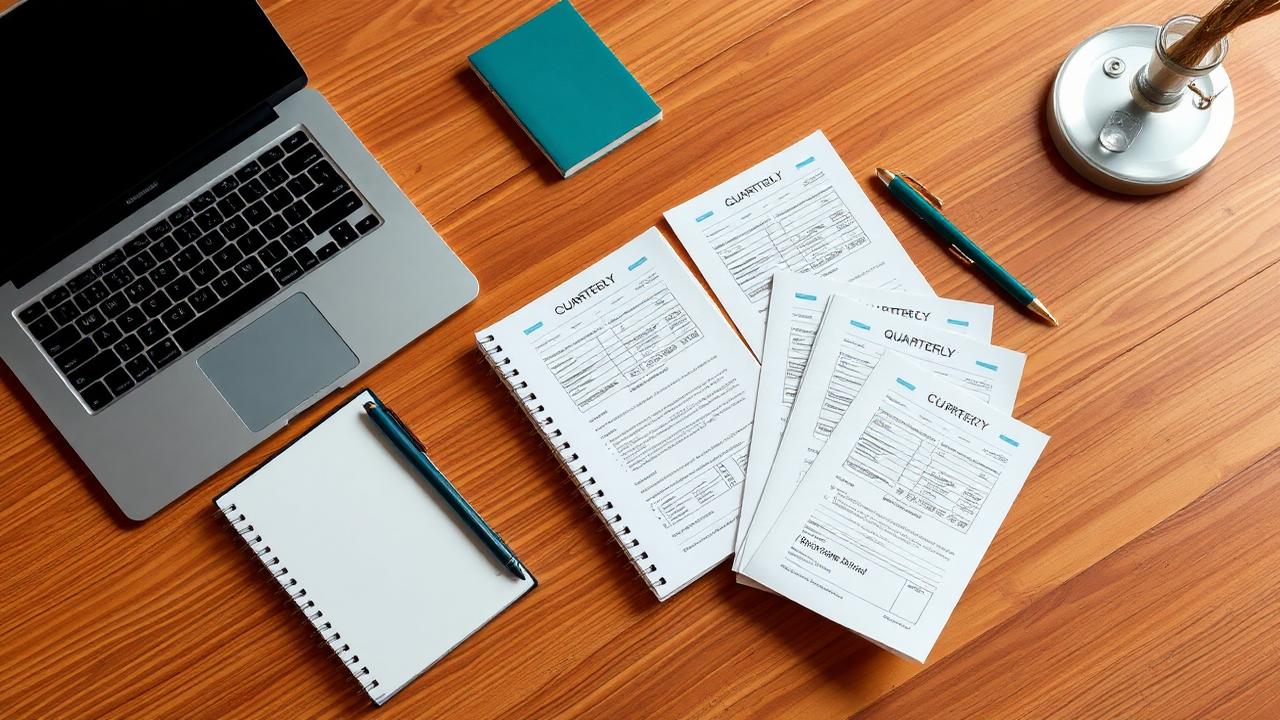
A regular paycheck comes with taxes already taken out. Side income — freelance projects, gig-driving, consulting, an online shop, rental income — usually does not. That gap catches a lot of people off guard the first year they earn meaningful money outside a traditional job, because the tax bill doesn't show up until they file, by which point it can be a shock.
The IRS's answer to this gap is the quarterly estimated tax system: a pay-as-you-go structure that applies to income not subject to withholding. Understanding how it works, and how to estimate what you owe, can save you both money and stress.
The US tax system is designed to collect tax throughout the year, not in one lump sum in April. Employees satisfy this through withholding. Self-employed people, freelancers, and anyone with substantial untaxed income (investment gains, rental income, side-gig earnings) are expected to send in estimated payments four times a year to cover both income tax and, for self-employed individuals, self-employment tax (which covers Social Security and Medicare).
If you don't pay enough throughout the year — through withholding, estimated payments, or both — the IRS can charge an underpayment penalty, even if you pay your full balance by the filing deadline.
Estimated payments are generally due four times a year, in mid-April, mid-June, mid-September, and mid-January of the following year (the exact dates shift slightly depending on weekends and holidays, so always confirm current due dates on the IRS website). Despite the word "quarterly," the periods aren't equal in length — it's a fixed four-payment schedule tied to specific calendar dates.
A commonly used approach is the safe-harbor method: paying at least a set percentage of your prior year's total tax liability (or a percentage of your current year's estimated liability) spread evenly across the four payments. Meeting a safe-harbor threshold generally protects you from an underpayment penalty even if your final bill ends up higher. The specific percentages and thresholds are set by the IRS and can change, so verify them each year rather than relying on old figures.
Suppose a hypothetical freelance graphic designer, Priya, expects to earn $60,000 in net side income this year, and estimates — after deductions — that her combined income tax and self-employment tax will come to about $13,200 for the year. Divided across four quarters, that's $3,300 per payment.
| Quarter | Estimated payment due | Cumulative paid |
|---|---|---|
| Q1 (April) | $3,300 | $3,300 |
| Q2 (June) | $3,300 | $6,600 |
| Q3 (September) | $3,300 | $9,900 |
| Q4 (January) | $3,300 | $13,200 |
If Priya's actual income ends up higher or lower than projected, she can adjust later payments accordingly — the schedule isn't locked in after the first payment.
Estimated taxes aren't an extra tax on side income — they're the same tax an employee pays, just collected on a different schedule because no employer is doing it automatically.
Many experienced freelancers set aside a fixed percentage of every payment the moment it arrives, moving it into a separate savings account earmarked only for taxes. This turns a large, stressful quarterly bill into a series of small, already-set-aside transfers. The exact percentage to set aside depends on your total income, deductions, and state taxes, so it's worth recalculating periodically rather than guessing once and forgetting about it.
Missing or underpaying a quarterly deadline can result in an underpayment penalty calculated based on how much you owed and how late the payment was, even if you eventually pay everything owed by the April filing deadline. Catching up as soon as possible, rather than waiting for the next quarter, generally reduces the penalty accrued.
Federal estimated taxes get most of the attention, but many states with an income tax run a parallel quarterly estimated payment system with its own due dates, forms, and safe-harbor rules. If you live in a state that taxes income, don't assume federal payments cover you — check your state department of revenue's requirements separately, since missing state estimated payments can trigger its own penalty on top of any federal one.
If you work across state lines, or as a digital freelancer with clients scattered nationally, it's also worth understanding which state actually has the right to tax your side income, since the rules vary based on residency and where work is physically performed.
Before calculating estimated payments, remember that legitimate business expenses — a portion of home internet used for work, mileage for client meetings, equipment, software subscriptions — can reduce the net income your estimated taxes are based on. Keeping organized expense records throughout the year, rather than trying to reconstruct them at tax time, generally results in a more accurate (and often lower) estimated tax calculation, and reduces the risk of overpaying the IRS in the meantime.
Informational only — not financial advice.
A plain-English guide to how paycheck tax withholding is calculated, why refunds or surprise bills happen, and exactly how to adjust your W-4 form.

Learn how the standard deduction and itemized deductions actually work, when each one makes sense, and how to run the comparison yourself each year.

Tax credits and deductions both lower your tax bill, but not equally. Here's how each mechanism works and why credits are usually worth more per dollar.